
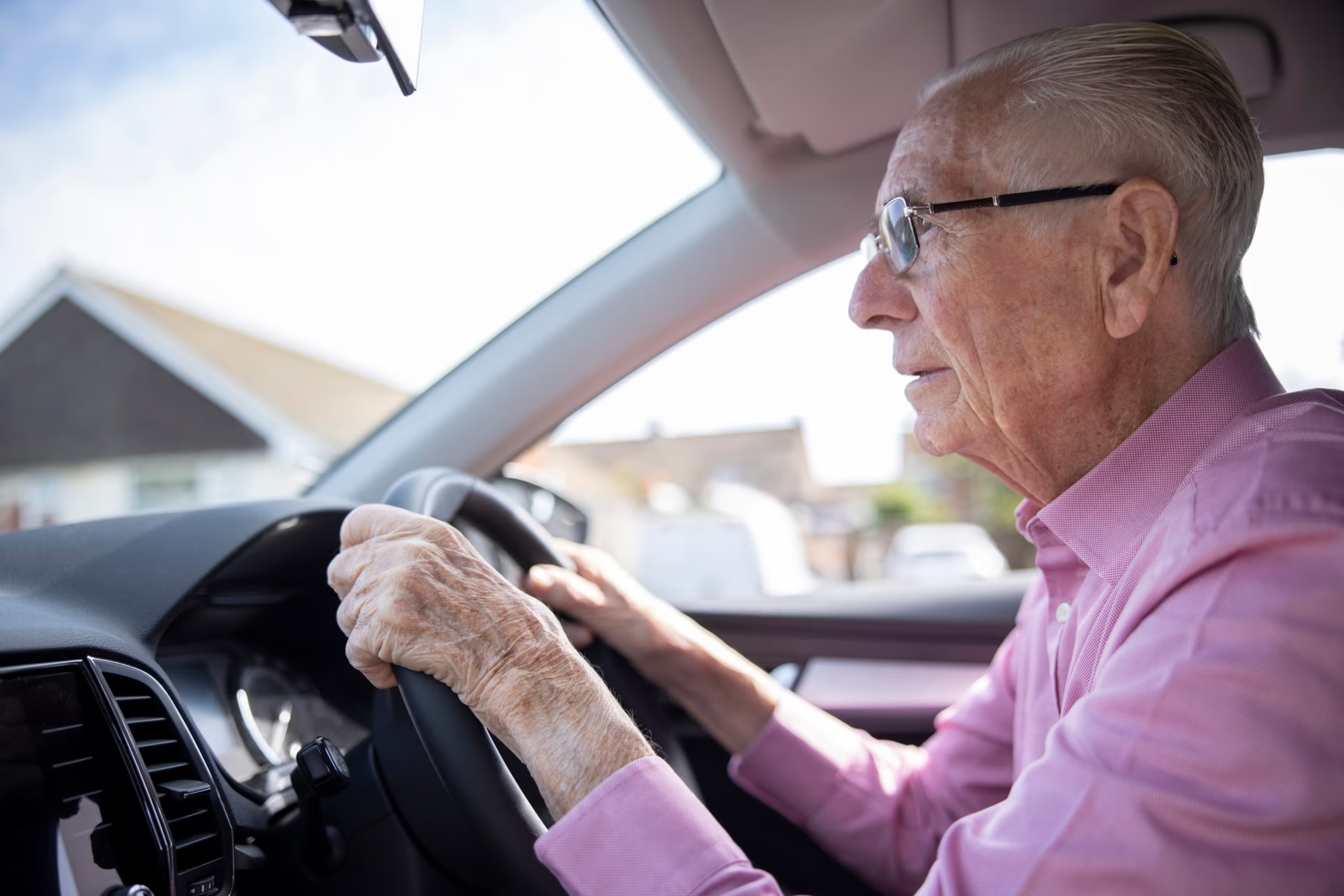

Every once in a while, the subject of older drivers on the road raises its ugly head – and it can be annoying. Not because safety doesn’t matter, but because the conversation so quickly turns into a lazy blame game. Yes, there’s no denying that some older drivers shouldn’t be on the road. But if we’re going to be honest, there are plenty of younger and middle-aged drivers who also shouldn’t be allowed behind the wheel – yet they somehow escape the same spotlight.
And that’s the point.
Road safety matters. But age has become the headline when it should be behaviour.
Are we confusing “slow” with “dangerous”?
A lot of what people complain about isn’t recklessness – it’s caution:
- taking an extra second at a junction
- leaving bigger gaps
- driving a little under the limit on unfamiliar roads
- not forcing tight spaces at roundabouts
That may be inconvenient to an impatient driver, but it’s not automatically unsafe. In fact, caution is often what prevents accidents.
Meanwhile, we regularly see truly risky driving from all ages: tailgating, speeding, aggressive overtakes, weaving, and the big one – phone distraction. Those behaviours rarely get labelled the same way, even though they’re far more likely to end in a crash.
The roads have changed
Many older drivers learned in a different world: less traffic, fewer distractions, smaller vehicles, less pressure. Today’s roads feel busier and more intense – and that matters.
So when an older driver hesitates, it might not be “decline.”
It might simply be adaptation to modern driving culture.
Driving is independence
For many older people, driving isn’t a luxury – it’s how they stay connected to life.
It’s shopping without relying on someone.
Seeing friends.
Getting to appointments.
Keeping dignity.
So when we casually talk about older drivers as a nuisance, we’re sometimes talking about shrinking someone’s world – without even realising it.

Yes, some people should stop driving – but keep the standard fair
Support for older drivers doesn’t mean ignoring reality. Some people do need to step back from driving.
But the key is this: the test shouldn’t be “How old are you?”
It should be “How safe are you?”
A review is worth considering if someone is:
- having frequent near-misses
- getting lost on familiar routes
- misjudging gaps repeatedly
- struggling with vision (especially at night)
- feeling anxious to the point judgement is affected
- affected by medication that causes drowsiness or dizziness
And that applies to every driver, not just older ones.
A better conversation
If we really want safer roads, we should talk more about:
- impatience and aggression
- distraction and phone use
- stress behind the wheel
- speed as a default mindset
- courtesy disappearing from driving culture
Because careful driving isn’t the problem.
Sometimes the problem is that we’ve normalised rushing – and we get irritated when someone refuses to join in.
Keep Well Reflection 🌿
If you’re an older driver, don’t let the noise shame you. Drive in a way that suits your body and confidence. Choose daylight routes if night glare bothers you. Plan quieter times. Take breaks. Keep eyesight checks up to date.
And if you’re behind an older driver: take a breath. A few seconds of patience costs you very little – and it protects something that matters: safety, dignity, and independence.
Safe roads don’t come from blaming older people.
They come from better behaviour – from all of us.
Keep well.