
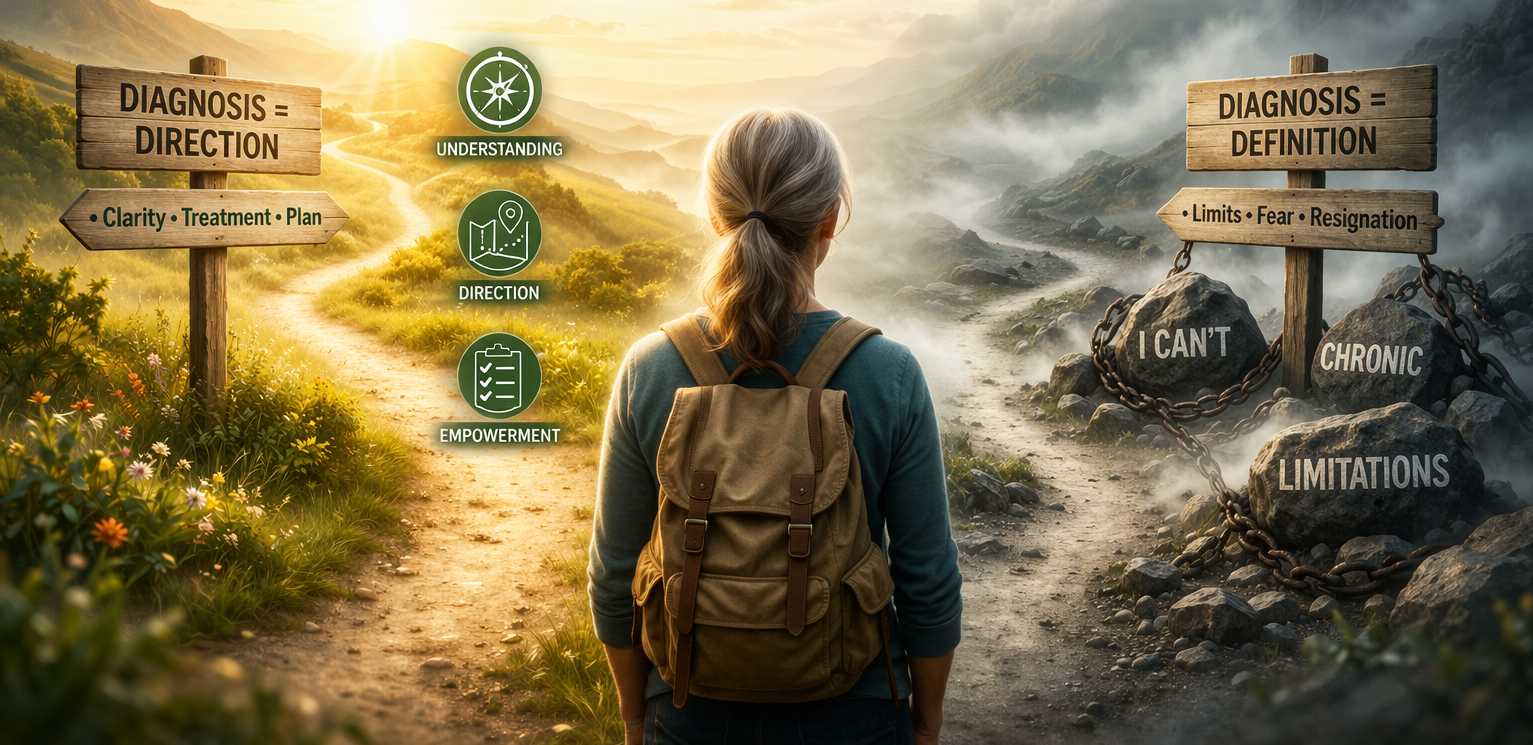

We live in a time where almost every health challenge has a name.
Arthritis. Anxiety. IBS. ADHD. Fibromyalgia. Menopause. Long COVID.
The list goes on.
Labels can be helpful. They offer clarity, direction, and often a deep sense of relief when we finally understand what we’re experiencing.
But here’s a sensitive question worth asking:
Have medical labels become so comfortable that they sometimes hold us back from improving our health?
Before we go further – this is not about blame or judgement.
For many people, a diagnosis is life-changing, even life-saving. It opens doors to treatment, support, and understanding.
But sometimes, without meaning to, we can begin to live as our diagnosis rather than live with it.
Why We Hold On to Labels
Most people don’t cling to a label because they enjoy it. There are genuine reasons we identify with them.
1. Labels Offer Validation
A name gives meaning to our struggle. It confirms we’re not imagining it.
After months or years of symptoms, a diagnosis can feel like finally being seen.
2. Labels Bring Community
Support groups, online forums, and social spaces create belonging.
There’s comfort in people who truly get it.
3. Labels Protect Us
Saying “I have arthritis” or “I have depression” can feel safer than saying,
“I feel stuck” or “I don’t know how to move forward.”
The label can shield us – from judgement, including our own.
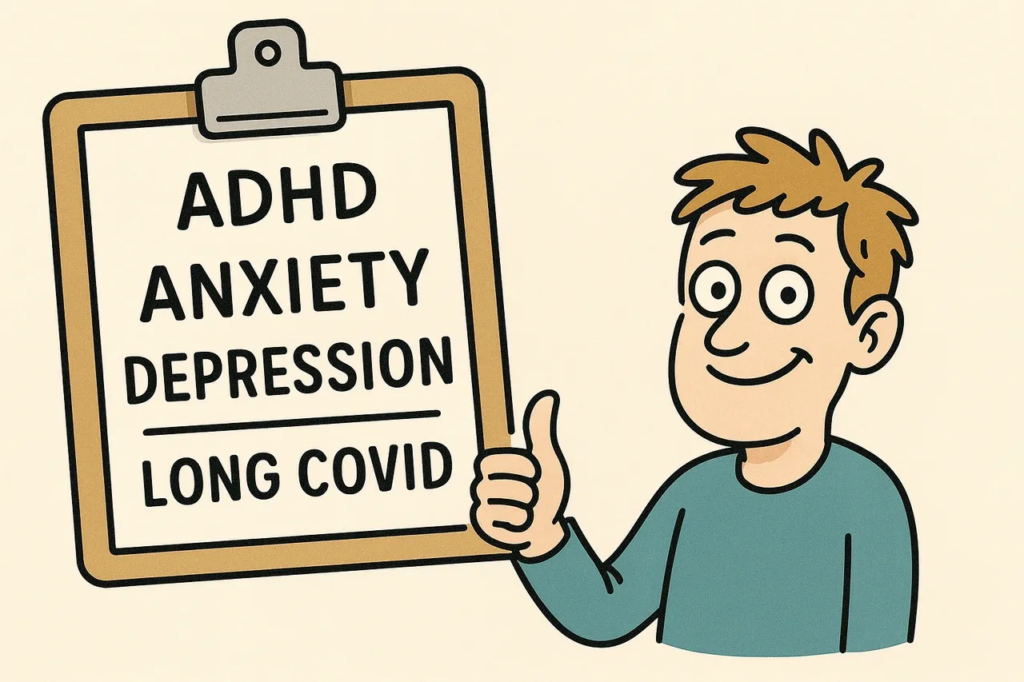
When a Label Helps… and When It Holds Us Back
A medical label should guide us – not define us.
There’s a simple mindset difference:
A label can be a seatbelt – or a handbrake.
The condition itself isn’t the issue.
It’s whether the label becomes permission to adapt –
or permission to stop.
The Moment a Label Becomes a Barrier
The shift is subtle. Emotional, not logical.
Over time we can start saying:
“I can’t exercise because I have arthritis.”
“My anxiety means I avoid social situations.”
“I’m menopausal – weight gain is just part of it.”
Reality Check
Is the condition real?
Absolutely.
Does it create restrictions?
Yes.
Is it a full stop?
Not necessarily.
Because for almost every challenge, there is usually an adapted path forward.
Adapted Paths, Not Abandonment
Arthritis → gentler movement, joint-strengthening exercises, pacing
Anxiety → breathwork, gradual exposure, supportive routines
Menopause → strength training, sleep support, nutrition adjustments
IBS → identifying triggers, gut support, stress management
It’s rarely the condition that freezes us.
It’s the belief that improvement isn’t possible.

A Label Is a Starting Point – Not a Life Sentence
Receiving a diagnosis can feel like a dead end.
But in reality, it’s the map key – helping us navigate more intelligently.
A better inner script might be:
“This is my current reality –
but I am not powerless to improve it.”
Having arthritis doesn’t mean giving up movement.
It means choosing the right movement.
Having anxiety doesn’t mean isolation.
It means starting with safe steps.
Your diagnosis explains where you are.
It does not decide who you are – or where you’re going.
The Power of Identity in Healing
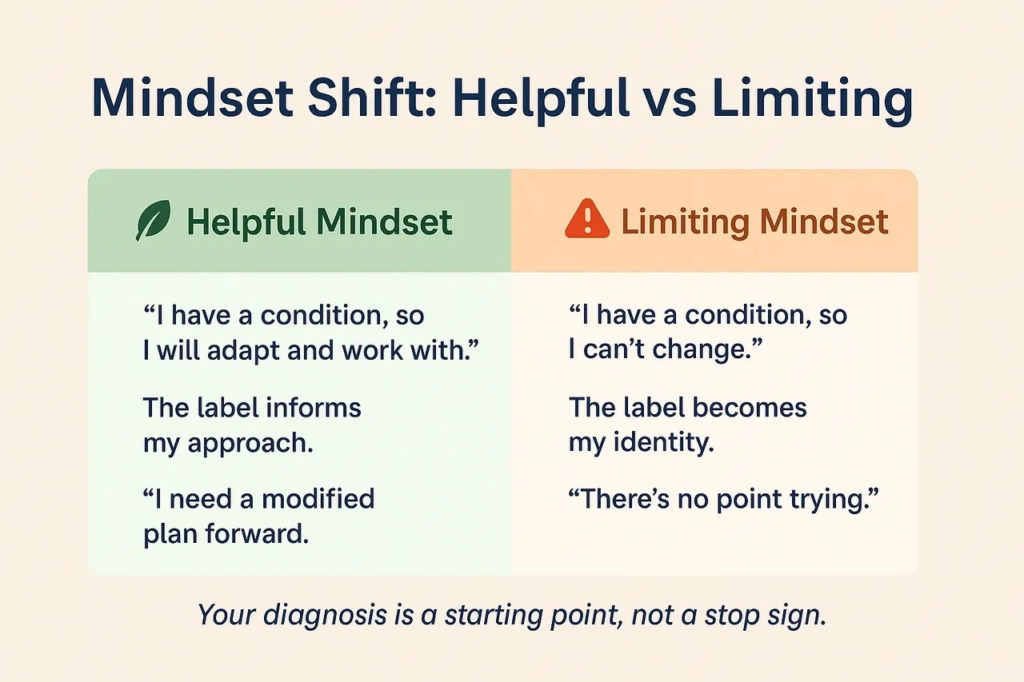
The Power of Identity in Healing
Research into mindset and healing consistently shows something powerful:
How we identify with a condition affects outcomes.
If the diagnosis becomes:
“I am this.”
It can subtly shape habits, effort levels, pain perception, and expectation.
But if the mindset becomes:
“I live with this – and I’m learning to manage it.”
There is room for growth.
Room for progress.
Room for hope.
And hope changes behaviour.
A Gentle Challenge
Without dismissing anyone’s struggle, consider:
Am I using my diagnosis to understand myself – or to limit myself?
What small improvement would be possible if I believed things could improve by just 5%?
Sometimes the barrier isn’t the condition.
It’s the story we’ve attached to it.
Final Thoughts
Health labels and identity are closely linked.
Labels bring clarity.
They bring support.
They bring direction.
But they should never become a cage.
You are not your diagnosis.
You are a person living with a condition –
and still capable of strength, adaptation, and improvement.
A label should empower the journey.
Not end it.
Keep Well Reflection
Your diagnosis explains your starting point – not your potential.
Medical labels can help us feel understood, supported, and informed. They have their place. But they are not who you are.
You are a whole person with abilities, strengths, resilience, and potential.
The label is part of your story – not your identity.
Let it guide you, not cage you.