


Simple ways to support digestion, strength and wellbeing as the years go by
As we get older, many of us notice things that were once easy no longer feel quite the same.
Meals may sit heavier.
Bowels may become slower.
Certain foods may cause bloating.
Energy may dip more easily.
This is often blamed on “just getting older.”
But in many cases, gut health plays a bigger role than people realise.
And the good news is this:
The gut can often respond well to simple support at any age.
Why Gut Health Becomes More Important Later in Life
Your gut is not only where food is digested.
It helps with:
- absorbing nutrients
- supporting immune health
- bowel regularity
- comfort after meals
- energy production
- inflammation balance
- mood and brain health
For older adults, these areas become increasingly important because they affect independence, mobility and quality of life.

Common Gut Changes in Older Age
Many adults notice changes such as:
Slower Digestion
Food may seem to “sit” longer.
Constipation
Often linked with:
- less movement
- lower fibre intake
- dehydration
- medications
Reduced Appetite
Sometimes digestion feels less efficient, so hunger signals change.
More Sensitivity to Certain Foods
Rich meals, fried foods, alcohol or overeating may feel harder to tolerate.
Bloating
Especially when eating too fast or eating foods the body struggles with.
Why These Changes Happen
A few reasons may include:
- less stomach acid
- reduced digestive enzyme activity
- lower physical activity
- changes in gut bacteria diversity
- medication use
- stress
- poor sleep
- lower fluid intake
This does not mean decline is fixed.
It often means the body needs a different approach now.
Why Gut Health Affects Strength and Ageing
This is where many miss the connection.
If digestion is poor, nutrient absorption may be poorer too.
That can affect:
- protein use for muscles
- iron and B12 status
- calcium and magnesium balance
- energy production
- recovery from illness or exercise
So gut health is not just about the toilet.
It can influence strength, stamina and resilience.
Simple Ways to Support Gut Health in Older Age
1. Walk Daily
Walking stimulates digestion and bowel movement.
Even 10 minutes after meals can help.
2. Eat Real Food More Often
Aim for meals containing:
- protein
- vegetables
- healthy fats
- fibre-rich carbohydrates
Simple food often beats complicated diets.
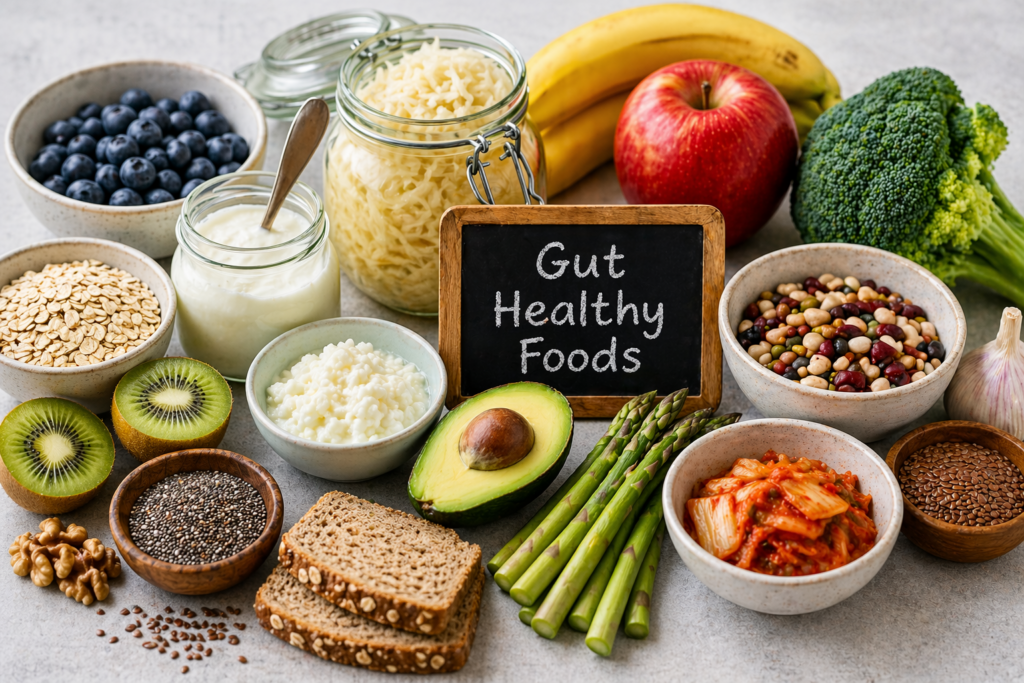
3. Increase Fibre Gradually
Helpful choices:
- oats
- berries
- apples
- beans
- lentils
- flaxseed
- vegetables
Go gradually and drink enough water.

4. Hydrate Consistently
Many older adults drink less than they realise.
Low fluids can worsen constipation and fatigue.
5. Support Good Bacteria
Consider regular small amounts of:
- live yoghurt
- kefir
- sauerkraut
- fermented vegetables
If tolerated.
6. Eat Calmly
Slow down.
Chew properly.
Sit down to eat.
Digestion begins before swallowing.
7. Keep the Body Moving
Strength work, stretching and walking all support digestive rhythm.
A Keep Well Truth
Sometimes what looks like “ageing” is partly:
- under-fuelling
- poor digestion
- dehydration
- inactivity
- stress overload
Support those areas, and people often feel noticeably better.
When to Seek Medical Advice
Always speak to a healthcare professional if there is:
- unexplained weight loss
- blood in stool
- persistent pain
- sudden bowel habit change
- swallowing problems
- ongoing fatigue
- loss of appetite
Never assume everything is “just age.”
Keep Well Reflection
The body changes with age.
But change does not always mean decline.
Sometimes it simply means:
👉 a slower pace
👉 better habits
👉 more attention
👉 wiser choices
The gut often responds well when treated with patience.

Final Thought
In younger years, many people get away with poor habits.
Later in life, the body asks for a little more care.
That is not weakness.
That is wisdom speaking.
Listen to it.
Need Personal Support With Your Health & Wellbeing?
If digestion, energy, movement or general wellbeing no longer feels quite right, a Personal Wellness Review can help you take stock and move forward with clarity.
A relaxed one-to-one conversation looking at your current habits, concerns and practical next steps to help you feel stronger, steadier and more in control.
Book Your Wellness Review